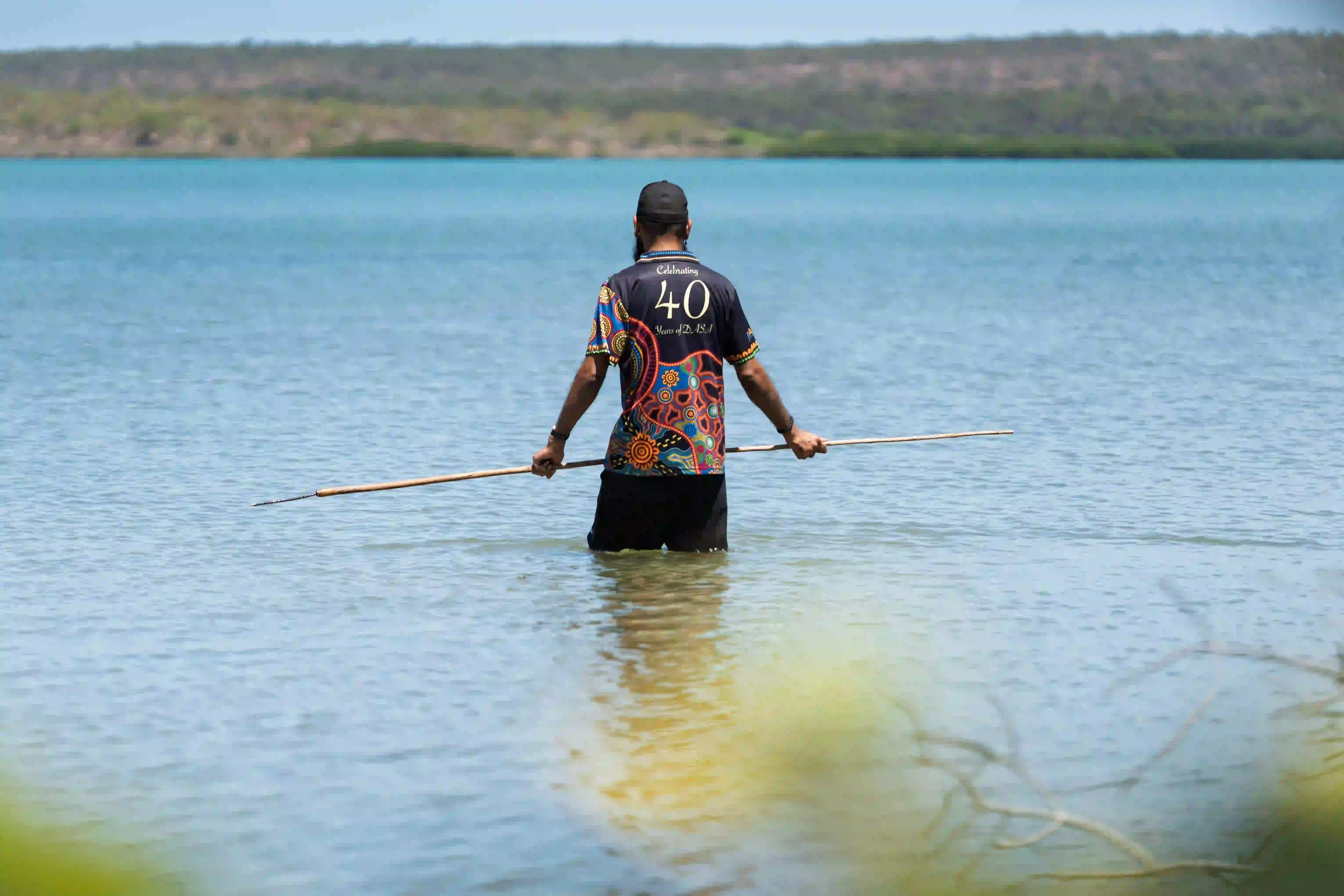

On Groote Eylandt, in the heart of the Gulf of Carpentaria, the Anindilyakwa people are leading a quiet revolution in healing, rehabilitation and justice. Through the Community Justice Group and Anindilyakwa Healing Centre, local leaders are creating safer, stronger futures built on cultural strength together with contemporary rehabilitative practices.
In 2019, the Anindilyakwa Land Council and the Northern Territory Government signed the Local Decision-Making Agreement Implementation Plan for Law, Justice and Rehabilitation, giving the Anindilyakwa people greater control over their justice system. The plan aims to increase the involvement and leadership of the Anindilyakwa people in the justice system; for Anindilyakwa culture to be respected in the justice system; and to reduce the number of Anindilyakwa people in the justice system.
In the five years since, recorded crime on Groote Eylandt has almost halved.
A recent evaluation of the Groote Eylandt justice initiatives reveals that from 2020/21 to 2024/25, there has been a distinct downward trend in overall crime committed on Groote Eylandt by Aboriginal people, from a total of 861 to 448 crimes recorded, respectively. And while there are other factors that have likely contributed to this outcome, the evaluation concludes the justice re-investment initiatives have been important to the reduction.
Anindilyakwa Land Council Chair Cherelle Wurrawilya says the Community Justice Group and the Anindilyakwa Healing Centre are proving that local decision-making works:
“We now have a justice system that listens to our voices, values our culture, and supports our people,” she says. “We are seeing fewer people reoffend, more people engage with rehabilitation, and stronger relationships between our community and the justice system.”

Justice, the community way
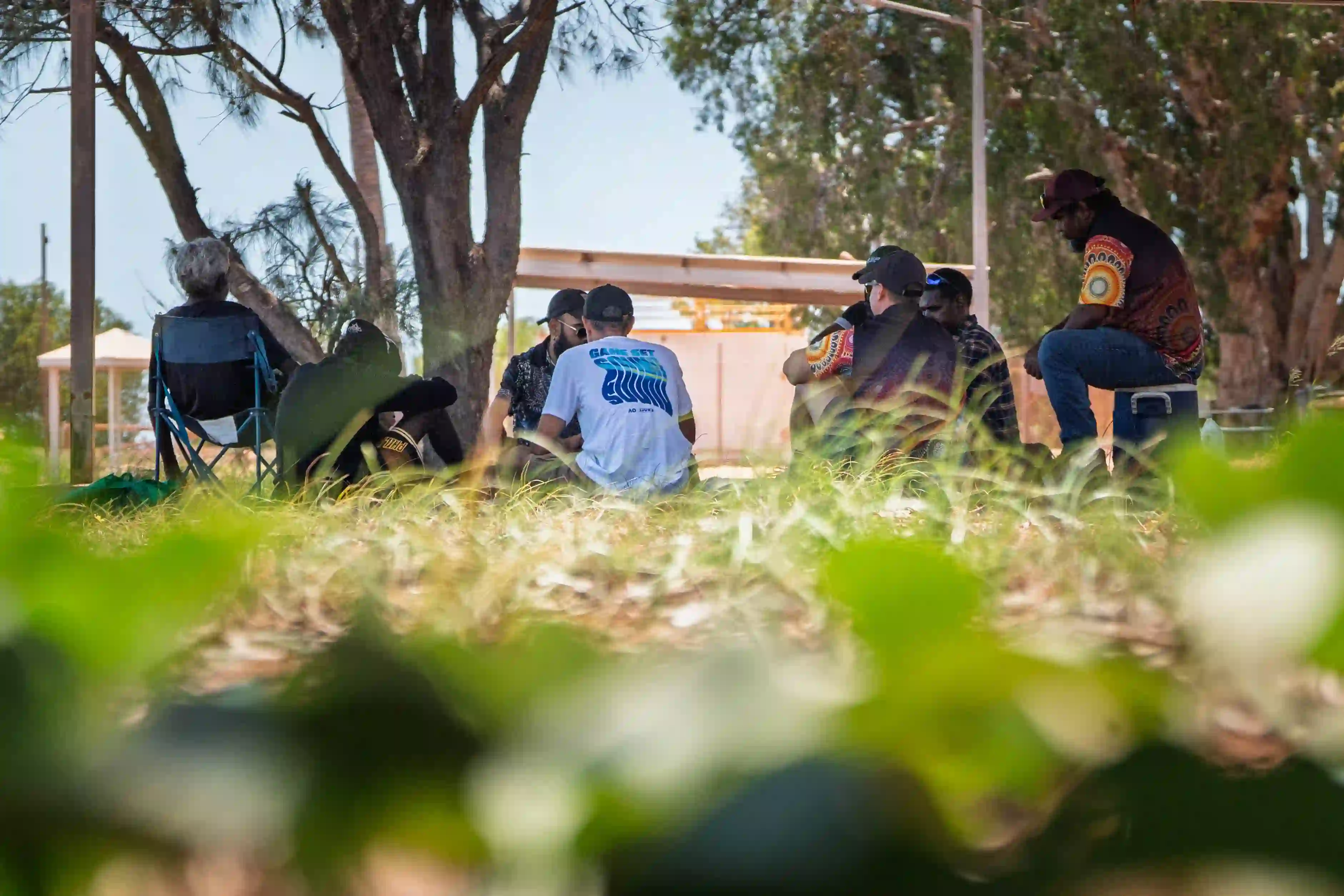
The Anindilyakwa Land Council officially launched the Community Justice Group, comprised of community Elders and/or respected persons from Groote Eylandt, in 2020. Members of the group support safety initiatives such as peacemaking (mediating and de-escalating community conflicts), and provide advice, targeted support and education to reduce the rate of offending.
The evaluation found the Community Justice Group and the Police were actively strengthening their relationship and collaborating to improve justice outcomes for the community; a shift both desired and observed.
“Before it was really bad here,” one community member said. “Now the Community Justice Group is helping the kids – picking them up, being with them ‘til the court is over.”
Sitting alongside the Judge, the Community Justice Group also actively participate in Community Courts to promote understanding, engagement and accountability of people that have offended, and recommend carefully crafted sentencing options. In addition, the Group provide transport and logistics, translation, referrals, social and emotional support and targeted case management both pre- and post-sentencing.
The evaluation found the Community Court Judge deferred to the members for advice and information, invited their contribution, and in almost all instances, handed down sentences that aligned with the recommendations members had articulated.
The community reports the approach has been an important factor in the justice system being perceived as fairer and more impactful.
One community member said, “More and more people are keen to go to Community Court because people know that they have a better chance of being heard than in Local Court… In Local Court, they’re just seen as their crime, but in Community Court, they are seen and heard as a person.”
A blueprint for healing
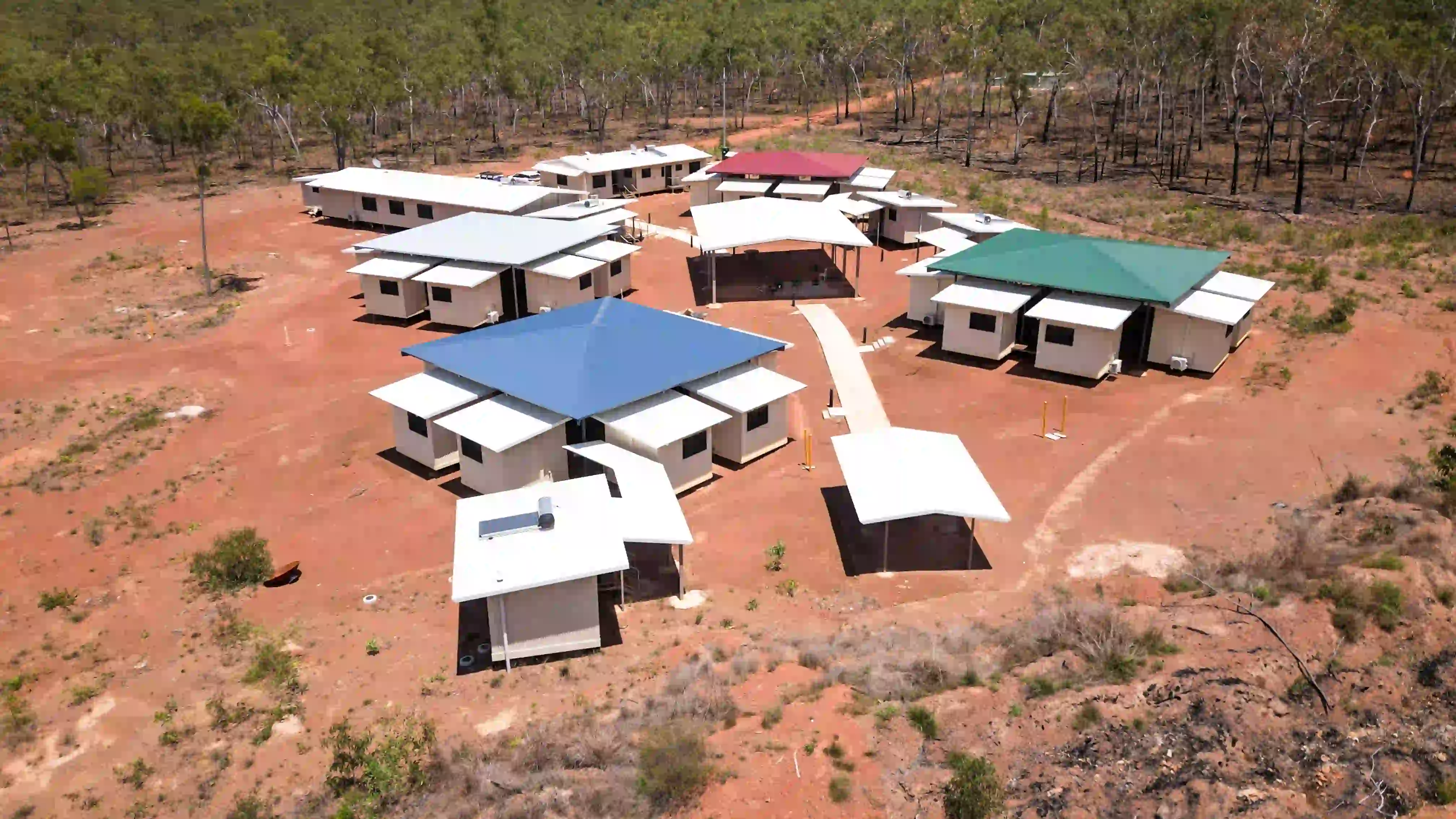
In December last year construction was finished on the Anindilyakwa Healing Centre, a purpose-built, 32-bed therapeutic residential program for Anindilyakwa Men on Groote Eylandt to provide a diversion and alternative to imprisonment. After operating a day program for almost a year to help people change offending behaviours, Drug and Alcohol Services Australia expanded its work in June 2025. The organisation, which runs the alternative to custody facility, began offering a residential program built on best practice, evidence, and Anindilyakwa cultural values.
Drug and Alcohol Services Australia experienced some early challenges related to safety, recruitment and retention of staff (owing to the location’s remoteness and lack of suitable housing), and confusion among stakeholders about the specifics of the support model. Working with the Community Justice Group and other stakeholders to address these challenges, the Centre is beginning to show promising signs.
“We can see the change in the guys that have been going there,” said a community member. “They’ve come a long way. They like being busy. They like the structure out there.”
A community-led future
Across the spectrum of stakeholders, the level of goodwill, hope and enthusiasm for Groote Eylandt’s justice reinvestment initiatives, introduced with the bipartisan support of the Northern Territory Government, has proved paramount to its success.
The community wanted different justice outcomes and options, including through opportunities for offenders to serve sentences and rehabilitate on country. Stakeholders in the evaluation were consistent in their views that the justice reinvestment initiatives on Groote Eylandt were important, progressive and improved Aboriginal social justice outcomes for the Anindilyakwa.
“These outcomes are the result of Anindilyakwa leadership, vision, and hard work,” continues Cherelle Wurrawilya. “We are proud of what has been achieved, and we remain committed to building a future where our people continue to lead important reforms to make our lives better.”
PRF provided a $3.45million grant to the Anindilyakwa Royalties Aboriginal Corporation to contribute to the construction of the Anindilyakwa Healing Centre. This story is based on the Final evaluation report: the Anindilyakwa Healing Centre and Community Justice Group initiatives on Groote Eylandt, authored by Catherine Holmes Consulting and commissioned by PRF. Read the full report.
PRF also commissioned an evaluation of the Northern Territory Government’s Law and Justice Groups in Kintore and Maningrida, available here.