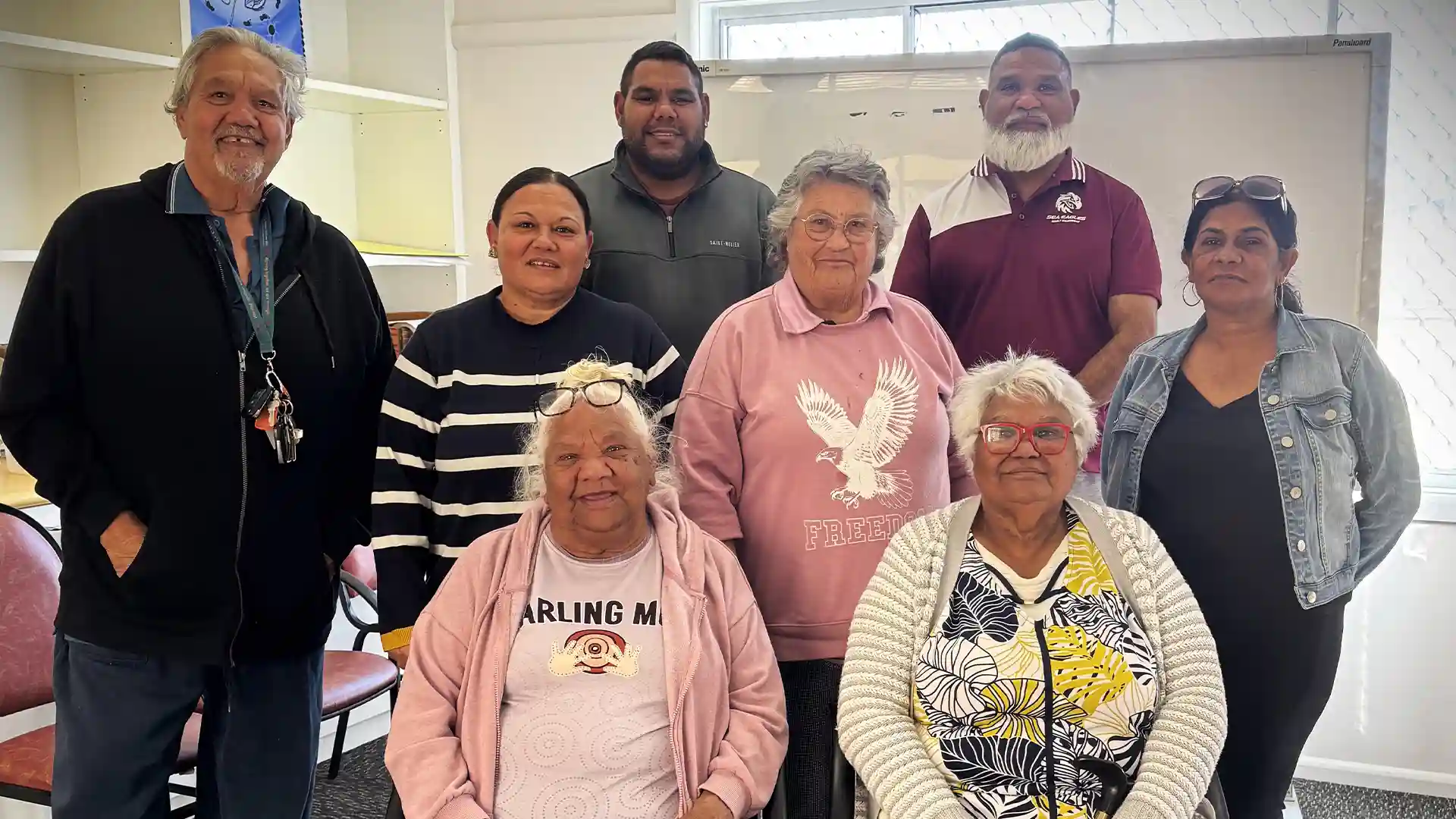

In the NSW town of Bourke, almost 800km north-west of Sydney, the Maranguka Community Hub, governed by the Bourke Tribal Council, is changing the way services are delivered to community to make sure Aboriginal and Torres Strait Islander kids are growing up safe, smart and strong.
In 2013 Maranguka partnered with Just Reinvest NSW to develop a proof of concept for justice reinvestment in Bourke. By addressing the underlying causes of crime, savings on criminal justice costs are reinvested in strategies that strengthen communities and prevent crime.
As an approach built on evidence, justice reinvestment requires access to data to enable shared learning and shared measurement for reform. Four years ago, Maranguka established the Palimaa Data Platform, partly funded by PRF, to enable community-led, place-based, data-driven decision making, and in August this year, made an interactive version publicly available.
The Palimaa Interactive Platform is a community-owned data platform, powered by the Seer Data platform, which centrally stores data from around a dozen custodians, including Western NSW Local Health District, Bureau of Crime Statistics and Research, Department of Communities and Justice, Department of Social Services, and the Australian Bureau of Statistics.
‘Palimaa’ meaning horizon ‘Where the Sky Meets the Land’, is allowing Bourke people to drive forward their community vision of a better future for children, young people and families.
“Palimaa brings together fragmented health, education, justice and local service data into a centralised, community-controlled platform to tell clear, visual stories about Bourke’s progress,” says Sheena Olsen of the Maranguka Backbone Operations team.
“It provides a single, trusted source for cross-agency data, improving transparency and speeding up responses to common questions, and importantly, it gives the Bourke community the authority to decide what data is collected, how it is used, who can access it, and how it reflects community stories.”
The data is culturally governed by the Bourke Tribal Council and used to inform local, place-based decisions. It also provides Elders, service providers and funders with a shared and transparent evidence base to support better outcomes for the community.
The platform’s design, co-created with Aboriginal community members in Bourke, reflects local language, knowledge systems, and ways of working, making it culturally relevant and accessible.
“We took a hands-on approach by conducting in-person research in Bourke,” continues Sheena. “Through workshops and conversations with Elders, service providers and young people, we gathered insights on data use, platform usability and accessibility to ensure the design was both culturally appropriate and practical.”
Already, data generated from Palimaa is guiding key decisions across working groups, capturing community feedback (such as from the Bourke Show survey), and highlighting areas for further action and investment.
The project was not without its challenges. Sheena says finalising data sharing agreements proved complex, and staff changes were another hurdle, slowing reviews and approvals. For communities seeking to establish their own platforms, however, Maranguka’s advice is simple, “Just get started.”
The team encourages others to invest early in governance, legal agreements, and co-design, and to roll out iteratively, building confidence and capability step by step.
“Palimaa serves as a scalable model for other Aboriginal and Torres Strait Islander communities, promoting broader adoption of First Nations Data Sovereignty principles,” says Sheena.