
Our 2023 Investment Policy Statement set aside a 10% allocation of PRF’s available endowment (i.e., excluding our Ramsay Health Care holdings), to create the Endowment Impact Fund. The goal was simple and ambitious. We wanted to show that it is possible to build a portfolio that delivers strong financial returns and meaningful impact at the same time.
We are testing this through a fund-of-fund strategy that aims to build a diversified portfolio that balances risk, return and liquidity. Every investment must meet our impact requirements, these are non-negotiable and a core part of our strategy. We focus on three priority areas:
- Invest in emerging impact funds and / or emerging impact managers;
- Build positions in impact funds that are showing strong performance; and
- Transition strong performing funds to the ‘main’ Investment Portfolio once they have demonstrated the required track record.
For the first time in 2024, we published a piece that looked under the hood of our Fund – sharing a review of its performance and insights. This year, we are continuing that commitment, with this, our second instalment.
How has the Fund performed?
Across FY25 we made $22m of new commitments from the Endowment Impact Fund. $15m of this was into four new funds, and $7m was increasing commitments into two existing assets. This has taken our total Endowment Impact Fund commitments to $139m across 12 impact funds. As of 30 September 2025 this represented 17.2% of our available endowment – against the initial 10% target.
Pleasingly, we’re seeing significant impact within the Fund’s portfolio. Across 2025 alone:
- 112 social and affordable homes have been built
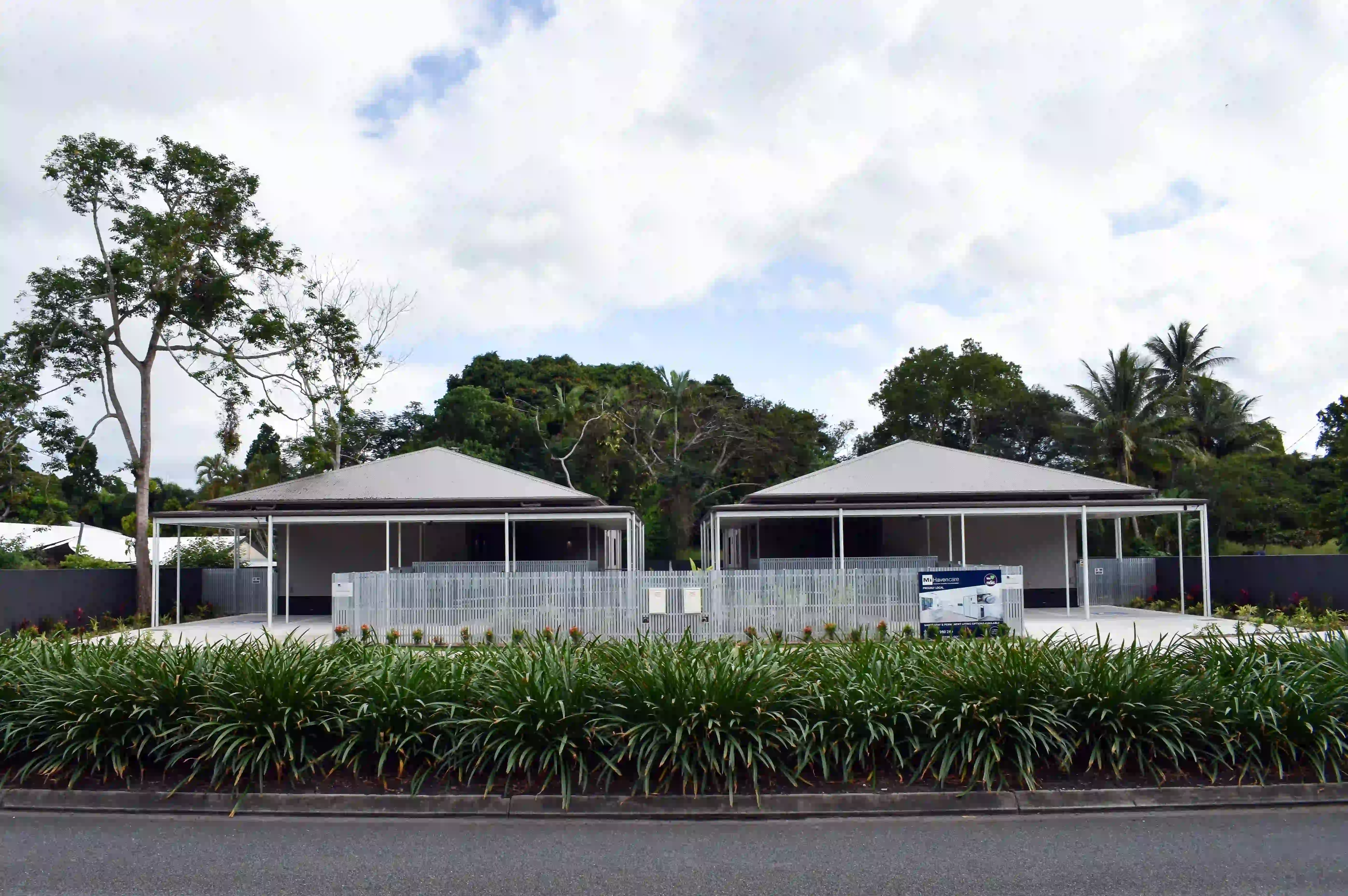
- 39 new SDA homes have been financed
- 394 people housed
- 126 new aged care places have been provided
- 76,100 learners have been supported towards employment
- 24,388 people have been supported with financial wellbeing
- 44,400 textured meals have been provided to people living with a disability
- 840,000 tonnes of organic waste have been treated
- 6,578,456 metrics tonnes of CO2 emissions have been avoided.
While a critical component, impact returns are only one of the required results.
We know that for impact capital allocation to grow we need to see financial returns. We also know that investing in impact funds – particularly when deploying into emerging funds – is a long-term play. Many of our investments are in their deployment phase, with a handful semi-stabilised. Yet encouragingly, returns are materialising.
At 30 September 2025, across 1-year, the Endowment Impact Fund has returned 6.55% net. Over 3-years – the Fund’s stated performance monitoring period – the Fund has returned 7.81% net. This represents +1.01% above its rolling 7-year CPI+3.5% financial benchmark.
The Fund has now made 13 consecutive quarterly gains, and although the ‘j-curve’ intrinsic in an emerging fund-of-fund strategy is real, we have been proven right – or perhaps fortunate – in our investment thesis to date. Strong performance from early investments has also helped ‘smooth’ the initial losses that subsequent funds inherently face.
What’s interesting is the noticeable increase in the value of distributions. FY25 saw income above $5m for the first time – this represents a 138% growth on FY24’s distributions.
Our ability to de-risk, and therefore leverage, third-party risk capital into our investments is an integral part of our thesis. If, as early investors, we can de-risk the opportunity for others and enable a track record, then the hope is that others will pile in. So far this has happened. Our Endowment Impact Fund investments have leveraged $2.0bn of capital, which means for every $1 invested by PRF, $10.90 has been invested by others. When applying a weighting based on our additionality (i.e., taking into consideration what we believe would have happened had we not invested) the figure remains significant at $1.4bn ($10.11 for every $1 invested).
Neither the growth in yield nor amount of leverage should come as a surprise given our investment strategy. We can, however, only deliver on our strategy, and thesis, if we make good investment decisions. While we know there will be bumps along the way, we’re pleased with the early evidence.
What’s changed?
While our ability to find quality opportunities and deploy capital within a defined strategy is evident, our impact measurement and management practice – by our own admission – has not kept pace.
The reality is that impact measurement is notoriously difficult. While in earlier years, we had not settled on a process that worked, 2025 became ‘the year of measurement’ for our impact investing practice. After 12-months of experimenting, iterating, learning, and hard work, we settled on a process that we feel is built on integrity, pragmatism and recognises - and seeks to address - the inherent power dynamics between investors and investees. Our approach integrates globally recognised tools such as the UN SDGs, the Impact Management Project’s Five Dimensions, the Efficient Impact Frontier, and our own outcomes – co-developed with investees. The focus is on evidencing impact at asset and portfolio level, and critically, to extract learning so that we can improve the way we invest.
This work culminated in a practice verification – undertaken by BlueMark – and will be the subject of an Insights Paper that we will publish in early 2026.
What’s changing?
For those eagle-eyed readers you will notice that our endowment allocation – initially (creatively) named the Mission Related Allocation – has gone through a re-brand.
We wanted to reflect the fact that the ‘Endowment Impact Fund’ is, and should be treated as, an investment fund in its own right. We’ve gone further than simply renaming the Fund. We updated our Investment Policy Statement in November 2025 (more on that to follow) with a crucial part of this being the enhanced sophistication of the Endowment Impact Fund’s Terms of Reference. What is most significant within this update is the introduction of a Strategic Asset Allocation Policy for the Endowment Impact Fund.
We know there are tensions between liquidity and impact. We also know that impact assets can often seem misaligned with ‘traditional’ asset classes and investment strategies. We have sought to address this – within a traditional 70/30 growth/defensive strategy – by considering how some asset classes, for example infrastructure and real estate, much of which is underpinned by long-term secured income, should be treated. We aren’t claiming that we have redefined asset ownership and management, however, we do think that (sub-asset class) distinctions between stabilised, yield generating assets and illiquid speculative long-term investments will go some way to address the role of impact investments in portfolios.
The improved professionalism of the Endowment Impact Fund’s Terms of Reference reflects what was already happening in practice. We have long moved away from opportunistic, ad hoc origination towards proactive portfolio construction. For example, ahead of FY26 we produced a ‘target list’ of investment profiles (rather than investments themselves) that we felt would support the further development of a well-rounded – perhaps model – portfolio. We have since been proactive in identifying and pursuing investments that fit these profiles. This is bearing fruit with a strong pipeline that possess these investment characteristics.
Finally, in a bid to further support portfolio formation, impact and returns, we have begun exploring thematic investing (the concept of identifying specific themes, then investing within these categories with the objective of building a complimentary portfolio and significant collective impact). We now have three emerging themes:
- Innovation and infrastructure – building a fair and just society – consisting of five investments
- Energy and climate – supporting decarbonisation – consisting of four investments
- Inclusive economy – building an equitable economy with shared prosperity – consisting of two investments.
We are pleased with our progress to date, excited by the future and encouraged by the number of new entrants (investors and investees – of all shapes and sizes) to the market. We continue to welcome challenge, debate and collaboration.